Key Points
-
The number of piers your home needs is the single biggest factor in your final price.
-
Houston's expansive clay soil, sometimes called gumbo clay, is the leading reason foundation movement happens here so often.
-
Standard homeowners insurance typically doesn't cover foundation damage from soil movement or gradual settling.
-
Getting at least two or three itemized quotes helps you spot a lowball bid that skimps on pier count or depth.
-
Winter tends to be Houston's most stable season for foundation soil, and often the easiest time to schedule a repair.
Average Foundation Repair Cost in Houston
Most Houston foundation jobs land somewhere between $3,500 and $15,000, and a lot of smaller, straightforward repairs — sealing a hairline crack or releveling a sunken porch — come in well under $10,000. If you want to see how these ranges compare outside Houston, our general foundation repair cost guide covers the national picture in more depth.
Look at the actual average across every completed Houston foundation repair, though — including the larger jobs and pier-and-beam projects that pull the number up — and the real figure runs closer to $7,500–$8,100. That's higher than the "typical" cost many contractors advertise, simply because it reflects the full mix of project sizes rather than only the smallest, most common ones. Within that range, the number of piers your home needs does more to determine your final price than any other single factor — a house needing a handful of piers on one side will cost far less than one needing full perimeter support.
Why Houston Foundations Move So Much
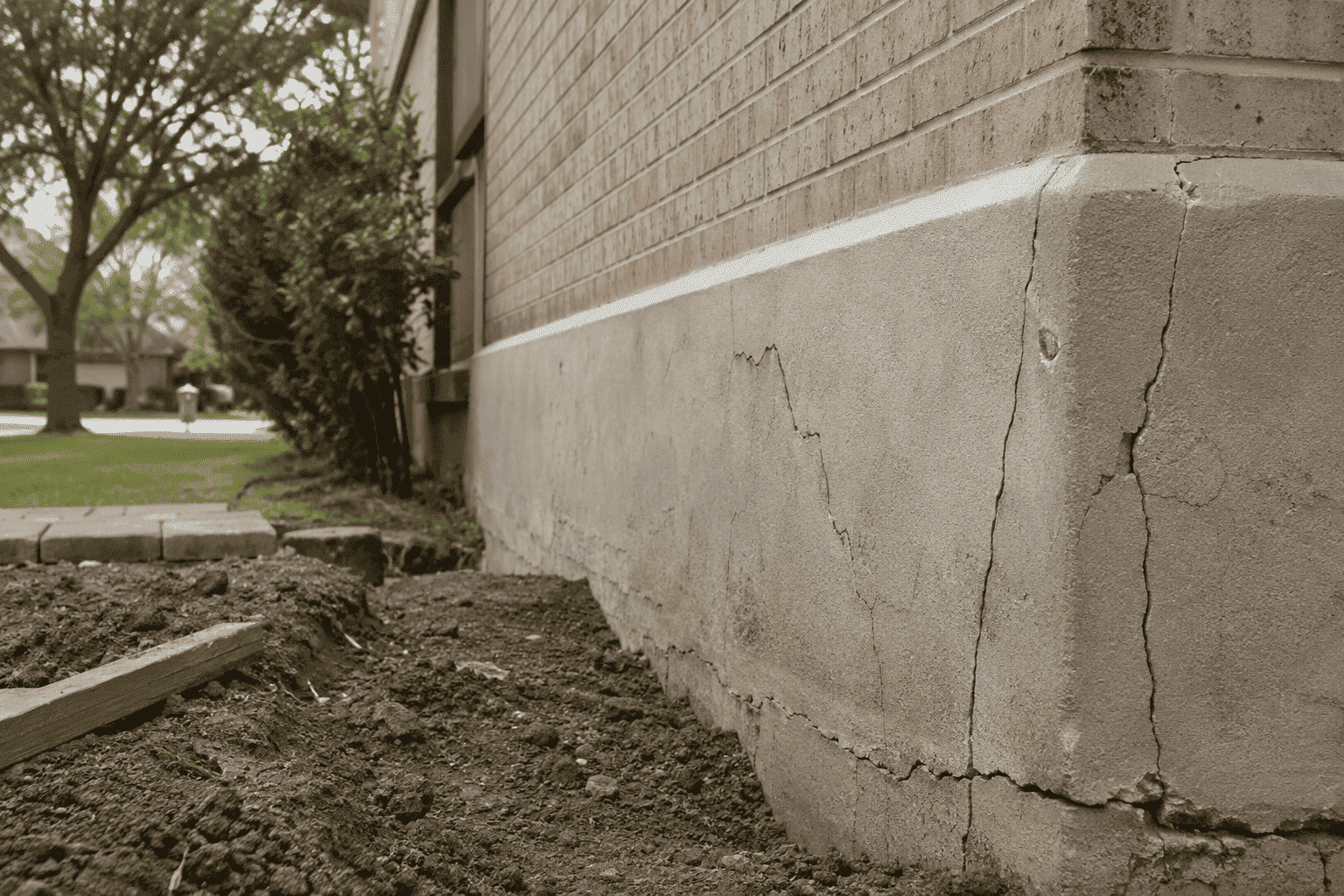
Foundation movement in Houston isn't usually a sign that a house was built poorly. It's largely a result of local soil and climate conditions:
-

Expansive clay soil: Much of Houston sits on expansive clay, often called gumbo clay. It swells when it absorbs rainwater and shrinks when hot, dry weather removes moisture.
-
Repeated wet-dry cycles: Houston often gets heavy bursts of rain followed by long dry periods. These cycles cause the clay beneath homes to expand and contract repeatedly, putting pressure on foundations.
-
High water table: In some lower-lying areas, groundwater sits relatively close to the surface, increasing moisture levels in the soil around and beneath foundations.
-
Land subsidence: Decades of groundwater extraction have caused parts of the greater Houston area to gradually sink. This ongoing issue is monitored by the Harris-Galveston Subsidence District.
-
Naturally reactive ground conditions: These factors don't necessarily mean a home was built incorrectly. They reflect the challenging soil and moisture conditions that Houston homeowners have to manage.
Cost by Repair Method
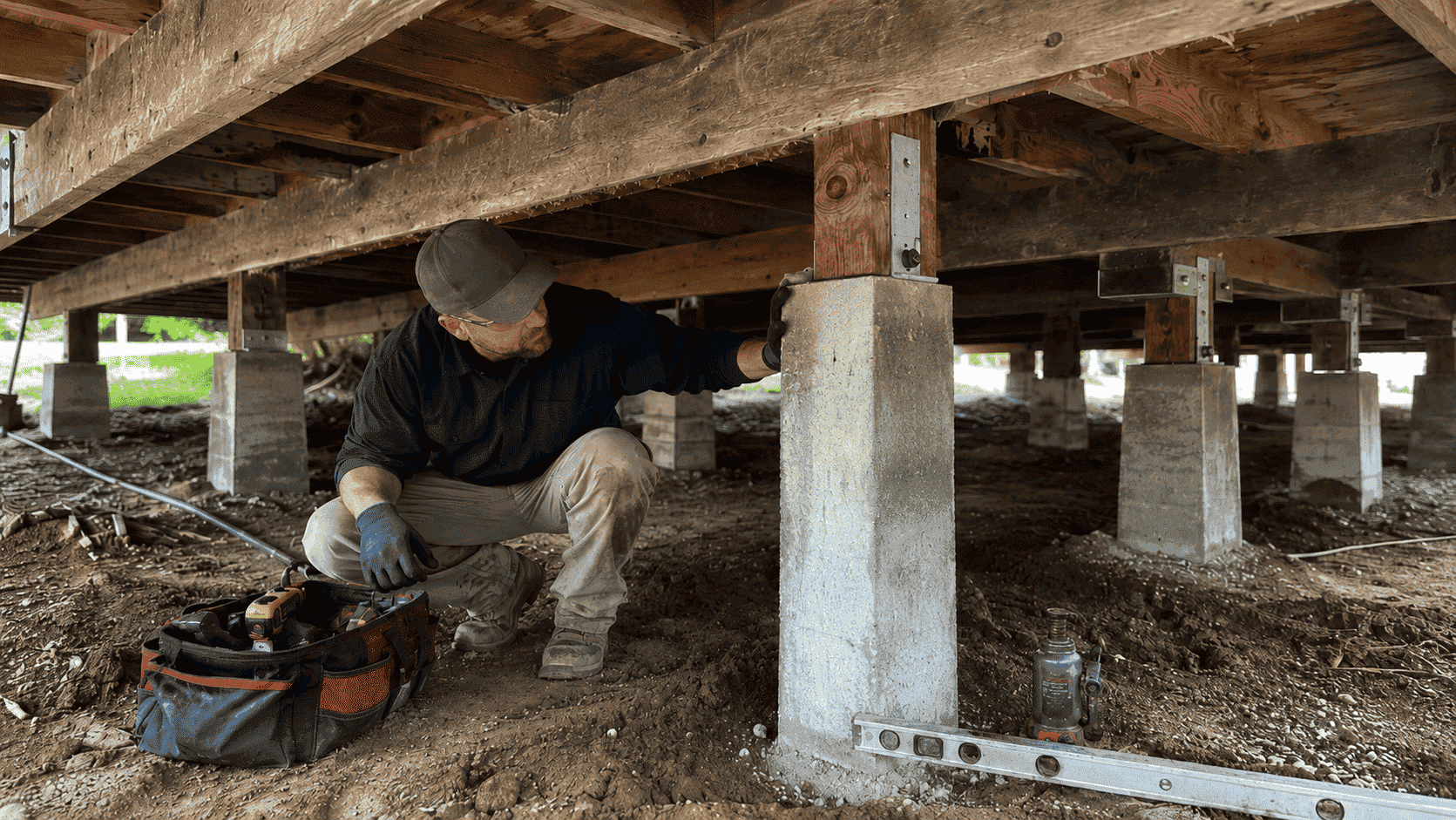
The right repair method for your home depends on how your foundation was built and how severe the movement is. Slab foundations typically need piers, while pier-and-beam homes are repaired differently, through releveling and beam work in the crawl space rather than piering.
| Repair Method | What It Addresses | Typical Houston Cost |
| Crack/leak sealing | Hairline and minor cracks | $500–$2,500 |
| Polyurethane foam injection | Crack filling, minor lifting, void filling | $200–$3,500 depending on scope |
| Mudjacking/slab leveling | Sunken slab sections, porches | $500–$1,500 per section |
| Concrete/pressed piers | Moderate slab settlement | $350–$1,200 per pier |
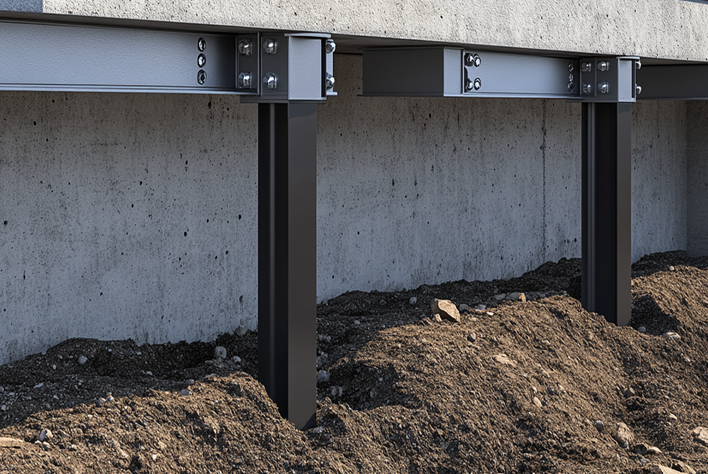
| Steel piers | Deeper or more severe settlement | $800–$4,000 per pier |
| Helical piers | Controlled deep support, tight access | $1,200–$4,000 per pier |
| Drainage system installation | Water and moisture control | $2,500–$10,000, averaging around $7,500 |
| Pier-and-beam releveling/repair | Reshimming, beam replacement, crawl space work | $3,000–$20,000, averaging around $10,800 |
| Whole-house leveling | Major structural correction | $15,000–$30,000 |
Most slab homes end up needing piers of some kind, which is why pier type and pier count — not the repair method label itself — usually decide where a specific project lands within these ranges. Pier-and-beam homes follow a different pattern: cost tracks crawl space access and the condition of the existing beams more than any per-pier number. A home with easy crawl space access and sound beams can come in near the low end of that range, while tight access or extensive rot pushes it toward the high end.
What Else Drives Your Final Price
Beyond the repair method itself, a handful of factors shape exactly where your quote lands.
-

Pier Count
Pier count matters more than anything else. A home settling on just one side may need as few as 6 to 10 piers, while a foundation needing full perimeter support can call for 20 to 30 or more — and a typical 2,000-square-foot Houston slab home often falls in that higher range when the whole perimeter needs work.
-
Interior vs. Exterior Access
How the piers get installed matters too. Exterior piers go in around the perimeter of the house with minimal disruption. Interior piers, needed when settlement is happening under the middle of the slab, require cutting through and later patching the flooring inside your home, which adds labor and material cost that exterior work doesn't.
-
Soil Conditions by Area
Soil conditions aren't uniform across Houston, either — clay content, moisture, and fill dirt vary by area, and that variation alone can shift what comparable homes pay for comparable repairs.
-
Engineer Reports and Permits
Some projects also require a structural engineer's report or a permit before work can begin, which adds both time and a separate fee to the overall cost of the job.
Cost by Houston Neighborhood
Foundation problems don't look the same across the city, since soil, construction era, and local geography vary block to block. Among the areas discussed here, a few patterns stand out.
In older inner-loop neighborhoods like the Heights and Montrose, pier-and-beam construction is common, so repairs often mean crawl space beam work rather than slab piering. Head west into Katy, Cypress, and other parts of West Houston, and heavy clay content or fill dirt used during development can mean piers need to go deeper to reach stable ground.
Newer master-planned communities such as Sugar Land and The Woodlands frequently use post-tension slab construction, which requires extra care during repair so the internal tensioning cables aren't damaged. In Meyerland, Bellaire, and Braeswood, past flooding has left lingering soil disturbance that can complicate foundation work years later.
Clear Lake and League City sit in an area with a high water table and documented land subsidence, both of which add ongoing movement pressure. Spring Branch and Memorial have their own quirk: original cast-iron drain lines running beneath mid-century slabs commonly fail over time, and that failure often contributes to foundation issues in those homes. And out in Spring, Kingwood, and Conroe, large mature trees pull significant moisture from the soil, which can drive root-related settlement close to the house.
None of this means one part of Houston has the worst soil in the entire metro — it means your neighborhood's specific history and geology are worth factoring into what you expect to pay.
Hidden Costs: Plumbing and Drainage
Foundation movement doesn't always stop at cracks and uneven floors — it can also damage the plumbing running underneath your slab, and poor drainage is often part of what caused the movement in the first place. Keep these possible add-ons in mind when budgeting:
-
Leak detection and repair: $500–$2,000
-
Rerouting damaged plumbing lines: $1,500–$5,000
-
Tunneling under the slab to reach a pipe: $2,000–$4,000
-
Correcting drainage (regrading, French drains, downspout extensions) — often recommended alongside the repair rather than after, since skipping it is one of the more common reasons a "fixed" foundation starts showing new movement within a few years
Does Insurance Cover It, and Is It Worth Fixing?
Standard homeowners insurance typically doesn't cover foundation damage caused by soil movement or gradual settling, since insurers generally treat that as a maintenance issue rather than a covered event. Damage tied to something sudden — a burst pipe that undermines the slab, for example — may be treated differently, so it's worth confirming the specifics with your own policy rather than assuming either way.
Even without insurance help, addressing foundation problems early is usually worth the expense. Movement that goes unaddressed tends to get more expensive to fix the longer it's left alone, and visible foundation issues can complicate — or stall — a future home sale. A documented repair backed by a transferable warranty, on the other hand, is something buyers and their inspectors generally view favorably, which means fixing the problem now tends to protect your home's resale value rather than hurt it.
How to Avoid Overpaying
A little diligence upfront can save you from paying for more repair than you need — or from paying twice because a corner got cut.
-

Get at least two or three written, itemized quotes that spell out pier count, pier type, and warranty terms — not just a single bottom-line total you can't compare apples-to-apples.
-
Be cautious of any quote that lands far below the others. Cutting pier count or pier depth to win a bid is a common way contractors shave a price, and it often means the same settlement returns within a few years.
-
Confirm whether a structural engineer's report is included in the quote whenever the scope of work calls for one, rather than discovering later it's a separate line item.
-
Act early rather than waiting. A minor crack repair costs a fraction of the structural work needed after years of unaddressed movement, so putting off a small fix rarely saves money in the long run.
Frequently Asked Questions
How much does foundation repair cost in Houston?
Houston foundation repair costs typically fall between $3,500 and $15,000 for most residential jobs, though minor crack repairs can start around $500 and major whole-house leveling can exceed $15,000. The actual average among completed jobs runs closer to $7,500–$8,100 once larger projects are factored in.
How much does one foundation pier cost?
Individual pier costs vary by type, running roughly $350–$1,200 for concrete or pressed piers and $800–$4,000 for steel or helical piers. Most homes need multiple piers, so the per-pier price matters less than the total pier count for your project.
Why does foundation repair cost more in Houston than in other cities?
Expansive clay soil is the main reason, since Houston's gumbo clay swells and shrinks dramatically with the region's rain-then-drought pattern, driving more frequent and more significant foundation movement. That movement often means more piers are needed compared to homes built on more stable soil elsewhere.
Does homeowners insurance cover foundation repair in Texas?
Standard homeowners insurance generally excludes foundation damage caused by soil movement or gradual settling, treating it as a maintenance issue rather than a covered loss. Damage from a sudden event, like a burst pipe, may be handled differently, so checking your specific policy is worth doing before assuming either way.
How long does foundation repair take?
Most slab pier jobs wrap up within one to three days once work begins. Larger projects, or ones requiring a structural engineer's report and permits, can take noticeably longer to schedule and complete.
What's the best time of year to schedule foundation repair in Houston?
Winter, roughly December through February, tends to be Houston's most stable season for foundation soil, since moisture levels stay more consistent than during the summer dry stretch or the rain-heavy spring and fall. Contractor availability is also typically better during this period, which can make scheduling easier.
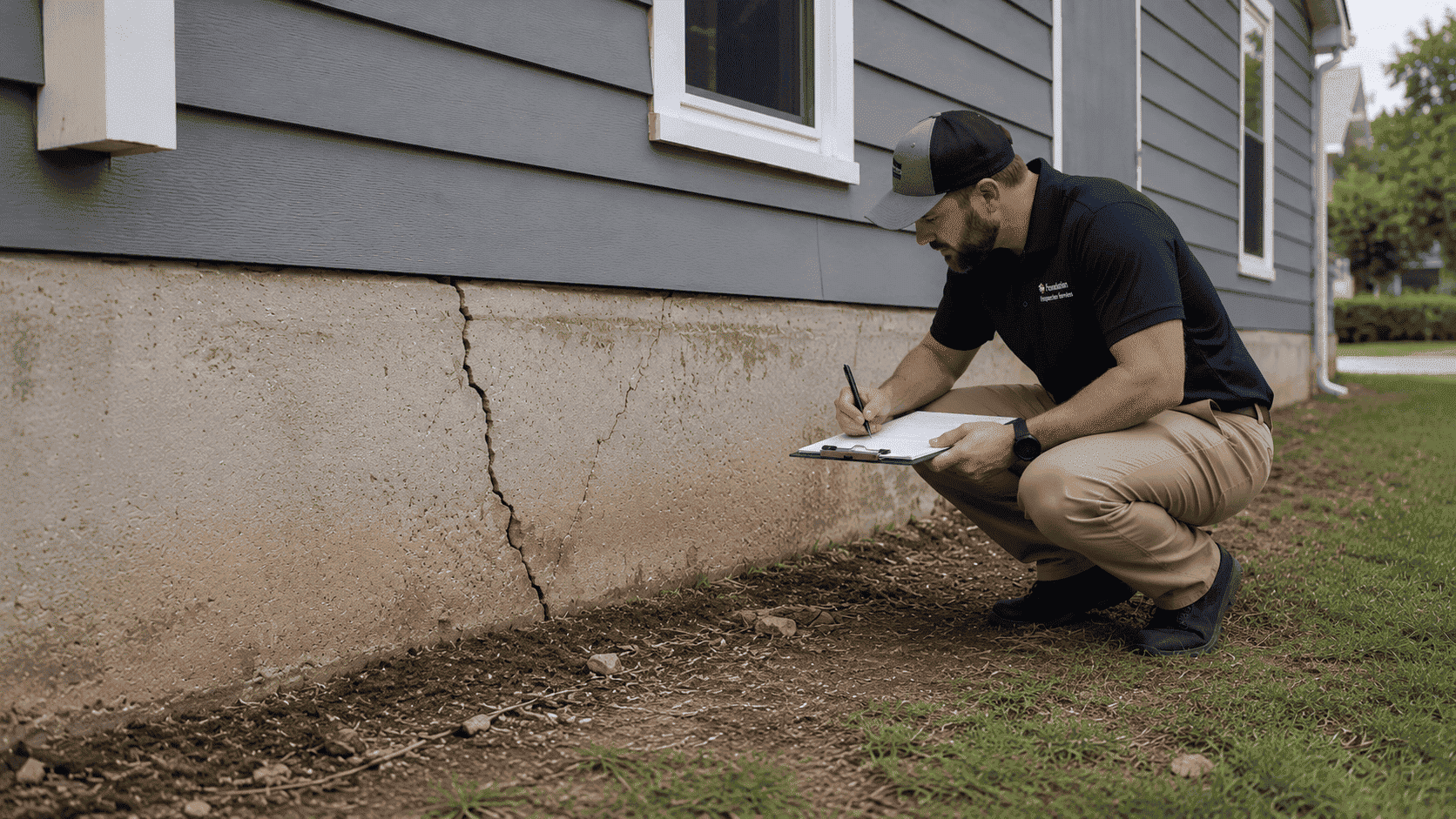
Foundation repair in Houston typically runs $3,500 to $15,000, and the region's expansive clay soil — through the pier count and neighborhood conditions it drives — does most of the work in determining where your project lands. Since so much comes down to your home's specific piers and soil, a firsthand assessment is the only way to get a real number. From there, you can compare foundation repair contractors near you to start collecting quotes.


)