Key Points
- Typical residential repair: $3,500–$8,000. Minor fixes from $500; severe structural work $10,000–$30,000+.
- Texas costs track close to the national average — the difficult soil makes foundation problems frequent, not necessarily more expensive.
- Pier count and pier type are the two biggest cost drivers, and they're also why two honest quotes can differ by thousands.
- Standard homeowners insurance usually won't cover soil-related settling — but if a sudden plumbing leak caused the damage, it can sometimes be covered.
- One cost the quote may not include: plumbing under the slab. If movement has cracked the lines down there, repairs can add up — so it's worth a leak test before work begins.
Average Foundation Repair Costs in Texas
Most Texas homeowners pay $3,500–$8,000 for a typical foundation repair. Minor fixes start around $500, and major structural work can top $30,000 — here's how it breaks down by severity:
| Severity
| What's Involved | Typical Cost (2026) |
| Minor | Hairline cracks, sealing, minor leveling | $500 – $1,500 |
| Moderate | A handful of piers, slab leveling, drainage | $3,500 – $8,000 |
| Severe | Extensive piering, major lifting, partial replacement | $10,000 – $30,000+ |
Quotes are usually built one of two ways: per square foot of affected area ($5–$25/sq ft), or per pier when piers are installed ($300–$2,500 each, depending on type). Per-pier is where the real spread lives — so that's where to look first.
Foundation Repair Costs by City: Dallas, Houston, Austin, and San Antonio
Cost ranges overlap across Texas metros because the specifics of the repair matter more than the city name. A small Houston job can cost less than a large San Antonio job, and a pier-heavy DFW repair can exceed a simple Austin crack repair.
Still, city-level soil, drainage, access, and permitting expectations affect the quote.
Metro | Typical Repair Range (2026) | What Usually Pushes Quotes Higher |
|---|
Dallas–Fort Worth |
$4,000 – $14,000
| Deep expansive clay, higher pier counts, deeper refusal, interior piers, and heavier two-story homes. |
Houston | $4,500 – $15,000 | Gumbo clay, flat drainage, high moisture, plumbing tests, French drains, and root barriers. |
Austin | $3,500 – $12,000 | Sloped lots, mixed clay and limestone, access problems, retaining walls, or deeper-pier needs. |
San Antonio | $3,500 – $12,000 | Clay/caliche variation, drought cycles, different methods by neighborhood, access limits, and pier depth. |
City matters, but usually less than homeowners expect — your actual quote depends more on measured movement, pier count, pier type, access, and drainage than on the metro name alone.
Is Your Quote Fair? A 30-Second Check
This check is for pier jobs — the most common Texas slab repair (over 90% of new Texas homes sit on slabs, per NAHB / U.S. Census data). If yours is priced per square foot (slabjacking) or it's a basement-wall repair, see the method table below — same logic: unit price × quantity.
A foundation quote is mostly arithmetic:
number of piers × price for that pier type + access + add-ons
Run your number through it before you assume you're being overcharged — or underbid.
A typical slab repair uses roughly 8–12 piers. Using the per-pier prices below, the same 10-pier job comes out very differently by system:
-

10 pressed-concrete piers → ~$3,000–$6,000
-
10 steel piers → ~$10,000–$15,000
That's a 3–5× swing on identical pier counts. So when two quotes look wildly different, it's usually one of two things — not automatically a ripoff:
-
Pier type. Pressed concrete is cheapest but can't always push past dry, dense Texas clay to stable soil. Steel and helical reach deeper and cost more. A higher quote may be specifying a system your soil actually needs.
-
Pier count. One contractor specs 8 piers, another specs 14. Ask each to show why — depth-to-stable-soil and load, not a round number.
Then add access — tunneling under the slab costs more than surface penetration — and add-ons like drainage, plumbing, and cosmetic restoration. If a quote sits far above this math with no explanation for which variable drives it, that's your question to ask.
What a typical pier quote looks like, line by line
A typical breakdown for a mid-size slab repair at current Texas prices.
-

Structural evaluation: $0 (free w/ repair)
Free, and often enough on its own. For extra certainty — or when quotes vary a lot — a paid independent engineer might be worth it: a neutral diagnosis and a scope that helps you land better offers.
-

10 pressed-concrete piers: $4,500 ($450 each)
Mid-range ($300–$600/pier). Ask how deep they go and whether they reach stable soil in your area.
-
Access & excavation (surface): $700
The cheaper route — tunneling under the slab would cost more.
-
Hydrostatic plumbing test: $250
Worth it — catches a leak before they lift, and a leak may open an insurance claim.
-
Permit & inspection: $200
A real line, not padding.
-
Concrete & landscaping restoration: $500
Vague — pin down exactly what's put back: drywall, tile, sprinkler lines, concrete, landscaping.
-
Lifetime transferable warranty: Included
Confirm it covers only these piers, the transfer fee, and that the company can outlive the warranty.
Total: $6,150
Quote Red Flags
Be careful if the estimate has:
-

no elevation readings or diagram;
-
no explanation for the pier count;
-
-
vague wording like "foundation stabilization" without scope;
-
no mention of plumbing testing when slab movement is involved;
-
a "lifetime warranty" with no written exclusions;
-
pressure to sign before getting another quote;
-
a very low price with unclear materials, depth, or warranty.
Why Foundation Problems Are So Common in Texas
Texas foundation repair is not automatically more expensive than the national average. The bigger difference is frequency and volatility: Texas homes are more likely to experience foundation movement because the soil expands and contracts aggressively with moisture changes.
Much of the state sits on expansive clay. During dry periods, clay shrinks and may pull away from the slab. After heavy rain, it swells and pushes back against the foundation. Repeating drought-to-flood cycles can cause settlement, heave, cracking, and doors or windows that move in and out of alignment seasonally.
Cost by Foundation Type
| Foundation Type | Typical Problems | Repair Cost Range (2026) |
| Slab-on-grade | Cracking, uneven settling, slab heave | $4,000 – $15,000+ |
| Pier & beam | Sagging floors, rotted/shifting supports | $2,500 – $10,000 |
| Basement (rare in TX) | Wall cracks, bowing, water intrusion | $10,000 – $40,000+ |
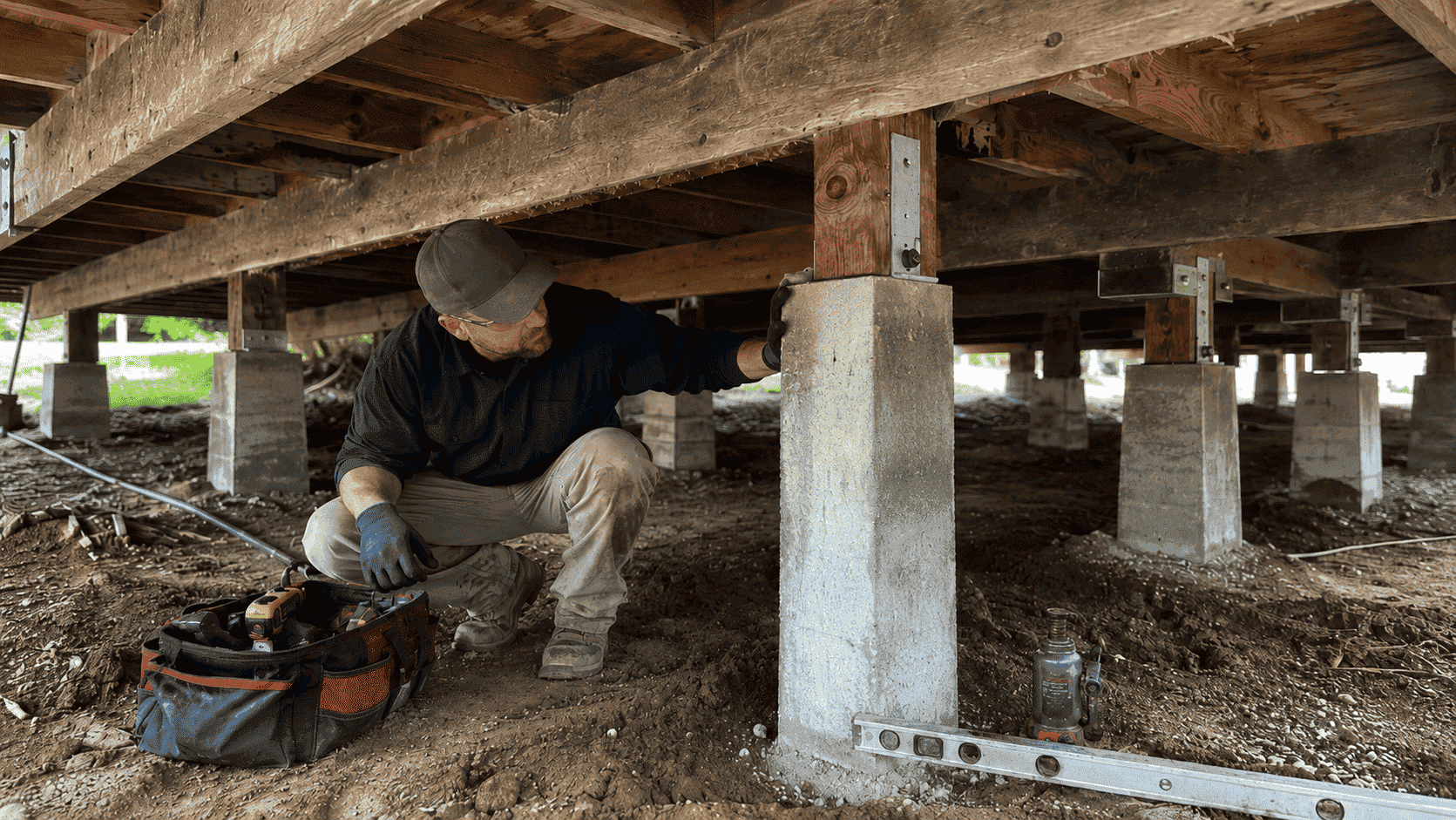
Slab-on-grade is the Texas default: the home sits on a single poured slab, so stabilizing it means driving piers to stable soil and raising the slab — equipment-heavy work. Pier & beam homes, mostly older, sit above a crawl space, which gives crews direct access to shim and re-support from below — often simpler and cheaper than slab work. Basements are genuinely rare here and, when present, the most expensive to fix, typically through wall anchors or carbon-fiber reinforcement.
Foundation Repair Costs by Method
| Method | What It Does | Price Range (2026) |
| Concrete / pressed piers | Stabilizes or lifts on stacked concrete cylinders | $300 – $600 per pier |
| Steel piers | Drives steel to deep stable soil | $1,000 – $1,500 per pier |
| Helical piers | Screw-in piers for lighter loads or light structures | $1,500 – $2,500 per pier |
| Slabjacking / mudjacking | Pumps slurry under slab to raise it | $500 – $1,300 or $3–$8/sq ft |
| Crack injection & sealing | Fills and seals cracks | $250 – $800 per crack |
| Drainage / waterproofing | Manages water to prevent recurrence | $1,500 – $8,000+ |
Two caveats worth knowing before you choose:
-
Mudjacking is cost-effective for minor settling, but it isn't a fix for active structural movement — on shifting clay, it can buy time and then re-sink.
-
Crack injection treats the symptom. If soil movement is the cause, sealing the crack without stabilizing the foundation just means the crack comes back.
Hidden Costs Most Homeowners Miss
The headline foundation quote is rarely the final number. Before you sign, ask what's included, what's excluded, and which items are billed separately — these are the extras that most often show up later:
-
Hydrostatic plumbing test ($100–$300). Run before or after leveling when a leak might be involved, to check whether water is part of the problem.
-
Under-slab plumbing repair ($2,000–$10,000+). Kicks in if foundation movement has cracked water or sewer lines beneath the slab — one of the biggest swing factors in a final bill.
-
Drainage systems ($2,000–$8,000). Needed when poor grading, pooling water, or bad discharge is driving the movement. It can mean regrading, gutter extensions, or subsurface fixes like a French drain.
-
Engineering report ($300–$800 for the initial inspection, $200–$500 for final certification). For an independent diagnosis up front, or documentation once the repair is done.
-
Interior cosmetic repairs ($1,000–$5,000). Drywall cracks, sticking doors, trim, flooring, tile, or paint that need fixing after movement or lifting.
-
Hardscape and landscaping restoration ($500+). Concrete, flower beds, sprinkler lines, or walkways are disturbed during excavation.
-
Root barrier / moisture control ($1,000+ for root barriers; $2,500–$5,000 for broader preventative systems). When large trees or uneven soil moisture are feeding the movement.
-
Tunneling / interior access (priced by scope). Added when piers have to go under interior slab areas rather than along the perimeter.
A thorough estimate names which of these apply to your home up front, rather than letting them surface mid-project.
The Plumbing Cost Nobody Quotes Up Front
Foundation movement frequently cracks the water and sewer lines running under your slab — and that plumbing repair can be a substantial cost of its own.
This is also why sequencing matters: a hydrostatic plumbing test before you commit ($100–$300) tells you whether a leak exists. If a leak turns out to be the cause of your movement, it changes who pays — because that's the one scenario where insurance may step in.
A safer sequence looks like this:
-

Test before work if there are signs of plumbing issues or if insurance may be involved.
-
Repair the leak first if the test confirms one.
-
Stabilize or lift the foundation after the cause is understood.
-
Retest if required by the contractor, engineer, insurer, or warranty terms.
Do You Even Need Repair Yet?
Not every crack means a major job. Hairline cracks that aren't growing are often cosmetic. What separates "monitor" from "repair" is whether the movement is progressive.
| Situation
| First Step |
| One stable hairline crack, no other symptoms | Monitor it. Mark the ends with a pencil and date it. |
| Water pooling near the slab, poor grading, bad gutters | Fix drainage before assuming piers are the answer. |
| Suspected under-slab leak | Get a plumbing test before signing a repair contract. |
| Quote over $10,000 | Consider an independent structural engineer before committing. |
| Contractors disagree heavily on pier count or method | Get an independent engineer or another written quote. |
| Multiple symptoms together | Get inspected: cracks, sticking doors, sloping floors, gaps, chimney lean. |
| Cracks widening or floors visibly moving | Treat it as active movement and do not delay inspection. |
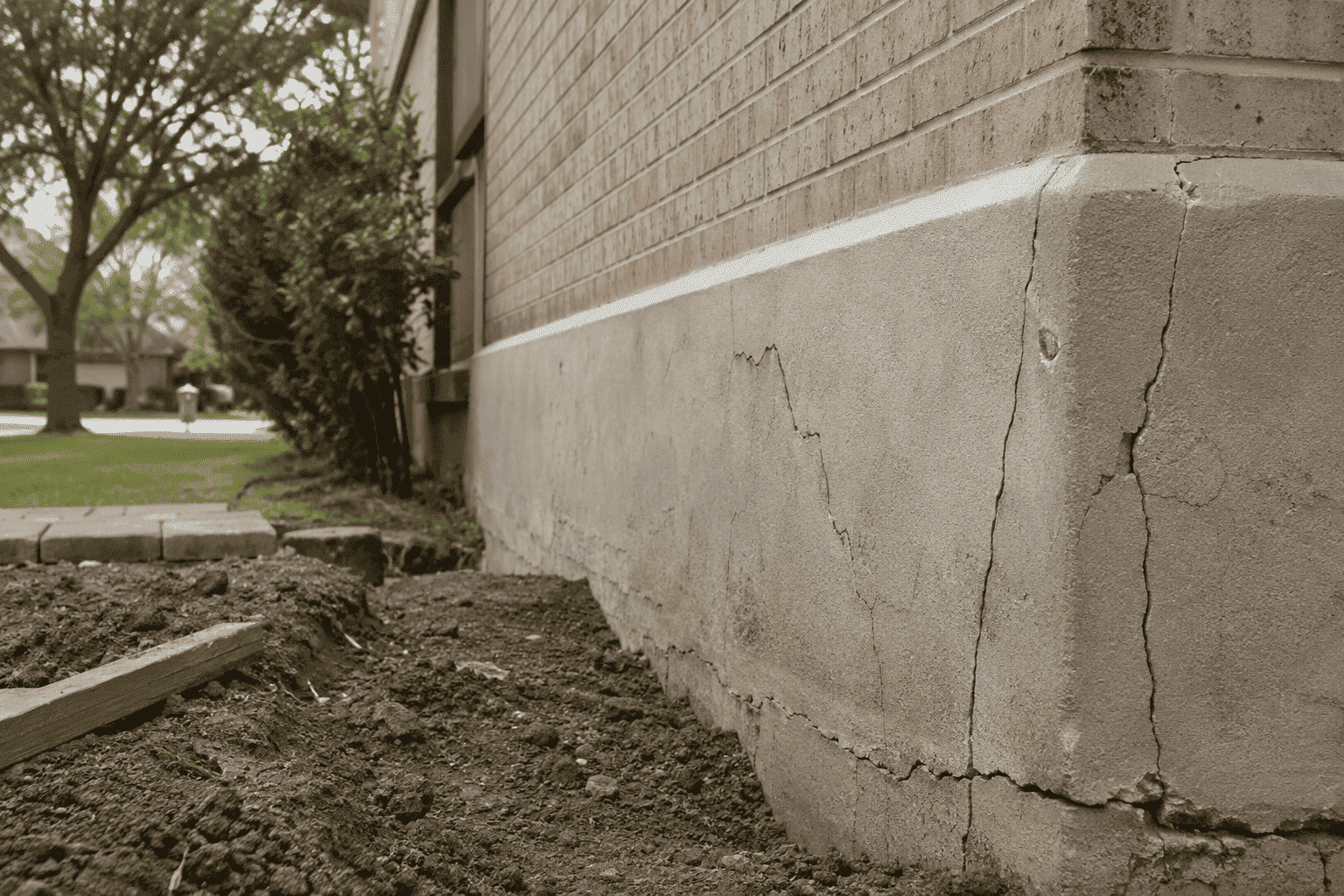
Common warning signs include stair-step cracks in brick, doors and windows that stick, sloping floors, gaps at baseboards or crown molding, cracked tile, and a leaning chimney. When several show up together, get it inspected — and it's worth also getting an independent opinion, not just from the company that would do the work.
If the issue looks active, compare foundation repair contractors near you before the damage spreads.
Paying for It: Insurance & Financing
-

When Insurance Actually Pays
Standard policies usually exclude foundation damage from soil movement, settling, expansion, wear and tear, or long-term moisture problems — the exact causes most common in Texas.
The exception is damage tied to a covered water event. The Texas Department of Insurance says homeowners' policies generally cover sudden, accidental water damage — like a burst pipe — but not gradual leaks, and has stated that under the older Texas HO-B policy form, foundation damage from accidental plumbing discharge can be covered.
Even so, not every claim is paid: coverage depends on your policy form, endorsements, cause of loss, and documentation.
If you suspect a leak caused your movement, the route to a covered claim is specific:
- Establish the leak with a hydrostatic or plumbing test.
- Get documentation tying the damage to the leak rather than long-term soil movement.
- Review your policy before starting permanent repairs.
- Document everything and file promptly; expect an adjuster inspection.
-
Financing Options
Common ways homeowners pay for foundation work include:
- HELOC or home equity loan;
- personal loan;
- contractor financing;
- local assistance programs, where available.
Financing can make the payment easier, but it should not replace quote validation. A bad $18,000 repair is still a bad repair, even if the monthly payment looks manageable.
Selling or Buying a Home With Foundation Issues
If you're selling, a documented repair is stronger than a vague statement that the home was "fixed." Keep the engineer's report, repair plan, final invoice, permit records, plumbing test results, and warranty certificate.
If you're buying, get your own independent inspection before closing — not just the seller's contractor report. An unrepaired foundation is a real negotiation lever; a properly repaired one with documentation and a transferable warranty is much less of a discount than buyers assume.
How to Choose a Contractor — and When to Get an Independent Opinion
A free inspection is a normal first step, but keep in mind that the diagnosis comes from the same company that would repair. On a big or disputed job, that's a reason to add an independent opinion — not to distrust the contractor.
A paid independent structural engineer's report can give you an unbiased diagnosis and a repair spec you can hand to several contractors for true apples-to-apples bids.
Consider a paid independent structural engineer if:
-
the quote is over $10,000;
-
contractors disagree on the pier count;
-
the repair includes interior piers or tunneling;
-
insurance depends on proving a plumbing leak caused the damage;
-
the contractor cannot clearly explain the measurements;
-
you are buying or selling the home.
Before you hire, check:
Warranty Scorecard
Before relying on a "lifetime transferable warranty," confirm:
-

Does it cover only the installed piers or the whole foundation?
-
Does it cover future movement in untreated areas?
-
-
Does poor drainage, tree roots, or plumbing damage void it?
-
Are adjustments included?
-
-
Is the warranty backed by the company only?
-
How long has the company been operating?
A lifetime warranty from a firm that closes is worth nothing, so ask how long they've operated.
How to Reduce Future Foundation Costs
Foundation repair isn't always a one-time expense in Texas — clay keeps moving as moisture changes sharply around the home. To reduce future movement:
-
keep gutters and downspouts moving water away from the slab;
-
correct grading where water pools near the home;
-
inspect plumbing if movement appears suddenly;
-
manage large trees near the foundation.
The goal isn't to stop Texas soil from moving forever — it's to reduce uneven movement so one side of the home isn't constantly wetter or drier than the other.
Frequently Asked Questions
Will my foundation move again after repair?
Texas clay never fully stops moving. A good repair stabilizes the areas that were piered, but other sections can shift later — and your warranty likely won't cover those. Treat the repair as the big cost, then budget for ongoing moisture management and the occasional check.
How long does the work take, and how long does it last?
Most residential jobs take one to three days. Quality piering is designed to last the life of the home and is usually backed by a long-term, transferable warranty — read the warranty terms above before relying on the word "lifetime."
What's the best time of year for repairs in Texas?
Year-round is fine, but stable soil moisture gives the most predictable lift. Many homeowners schedule in milder spring or fall, avoiding peak drought or the wettest stretches when the soil is at its extremes.
Can I stay in the home during repairs?
Usually, yes. Most exterior pier work and slab leveling lets you stay put, though you'll hear equipment. Your contractor should flag any situation that requires you to relocate.
When should I repair drywall, doors, or cosmetic damage?
Usually, after the foundation work is complete and the structure has settled from the lift. Ask the contractor when cosmetic repairs should begin so you do not patch cracks too early.


)